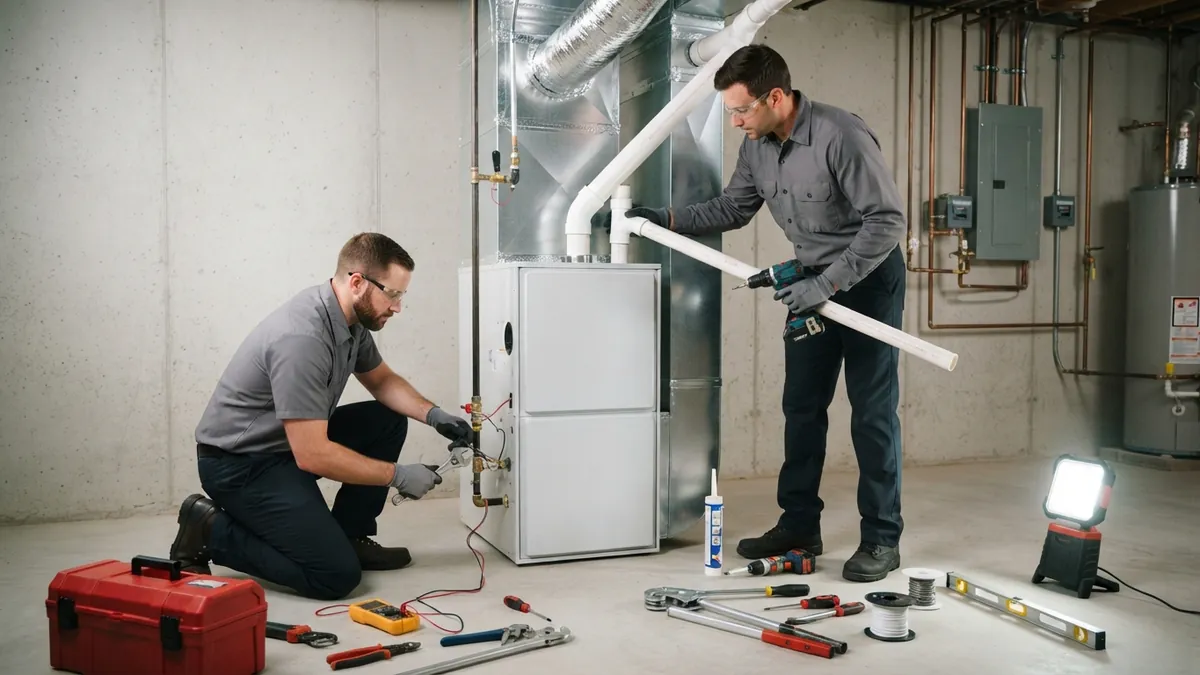
Replacing a gas furnace typically costs $3,500 to $8,000 installed in 2026, with most homeowners paying around $4,500 to $6,500 for a mid-range unit. High-efficiency (95% AFUE and higher) and two-stage or modulating furnaces cost more, often $6,000 to $10,000. Electric furnaces are usually cheaper to install but more expensive to run.
Here’s what drives the price, what’s included, and how to compare quotes.
Last updated: October 2026. Prices are typical U.S. ranges compiled from published contractor pricing and industry cost guides, and vary by region and home.
Furnace replacement cost by type
| Furnace type | Typical installed cost |
|---|---|
| Gas furnace, 80% AFUE (standard efficiency) | $3,000 to $6,000 |
| Gas furnace, 95 to 98% AFUE (high efficiency) | $4,500 to $9,000 |
| Two-stage or modulating gas furnace | $5,500 to $10,000 |
| Electric furnace | $2,000 to $6,500 |
| Oil furnace | $5,000 to $10,000 |
| Propane furnace | Similar to gas, plus any conversion parts |
Cost by size (BTU input)
| Furnace size | Typical home size* | Installed cost (mid-range gas) |
|---|---|---|
| 40,000 to 60,000 BTU | 1,000 to 1,500 sq ft | $3,500 to $6,000 |
| 70,000 to 80,000 BTU | 1,500 to 2,200 sq ft | $4,000 to $7,000 |
| 90,000 to 100,000 BTU | 2,000 to 2,800 sq ft | $4,500 to $8,000 |
| 110,000 to 120,000 BTU | 2,500 to 3,500 sq ft | $5,000 to $9,000 |
*Size depends heavily on climate and insulation. Ask for a Manual J load calculation; many older furnaces are oversized, which causes short cycling.
Standard vs. high-efficiency: is it worth it?
- 80% AFUE furnaces send about 20% of the fuel’s heat up the chimney. They vent through a metal flue and cost less up front.
- 95% AFUE and higher furnaces capture extra heat from exhaust gases, vent through PVC pipes, and need a condensate drain.
Switching from an 80% to a 95% furnace saves roughly 15% on heating fuel. In cold climates with long heating seasons, that usually pays back the price difference over the furnace’s life. In mild climates, a standard-efficiency furnace can make more financial sense. Converting from an 80% to a 95% furnace may add $500 to $2,000 for new PVC venting and a condensate drain.
What’s usually included
- Removal and disposal of the old furnace
- The new furnace and installation
- Connection to existing ductwork, gas line and electrical
- Venting changes needed for the new unit
- Thermostat connection and startup testing
- Permits (in many areas; confirm in the quote)
Possible extra costs
| Item | Typical cost |
|---|---|
| New PVC venting and condensate drain (80% to 95% conversion) | $500 to $2,000 |
| Chimney liner (if needed for remaining water heater) | $800 to $2,500 |
| Ductwork repairs or modifications | $500 to $3,000+ |
| New thermostat | $150 to $500 |
| Gas line or electrical work | $200 to $1,500 |
| Permit and inspection | $50 to $500 |
| New central AC or evaporator coil (if replacing together) | See below |
Furnace + AC or heat pump?
If your central AC is more than 10 to 12 years old, replacing both together often saves $1,000 or more on labor compared with separate projects, and ensures the blower and coil are matched. A furnace plus central AC typically costs $10,000 to $20,000. See central AC replacement cost.
You might also consider a heat pump, or a dual-fuel system that pairs a heat pump with a gas furnace. Compare the operating costs in our heat pump vs. furnace guide.
Rebates in 2026
The federal 25C tax credit, which offered up to $600 for qualifying gas furnaces, ended for equipment installed after December 31, 2025. Many gas and electric utilities and some states still offer rebates for high-efficiency furnaces and heat pumps. Check your utility’s website before buying.
How to compare furnace quotes
- Get at least three written quotes from licensed, insured contractors.
- Ask each for a load calculation instead of matching the old furnace’s size.
- Compare model numbers, AFUE, single-stage vs. two-stage vs. modulating, and blower type (variable-speed ECM motors are quieter and more efficient).
- Check what’s included: permits, venting, disposal, thermostat, warranty registration.
- Compare labor warranties, not just manufacturer parts warranties (often 10 years with registration; many heat exchangers carry 20-year or lifetime limited warranties).
- Be wary of quotes far below the others; corners are often cut on venting and gas work.
Is it time to replace?
Furnaces typically last 15 to 20 years. See how long a furnace lasts and use the repair vs. replace $5,000 rule before deciding.
Frequently asked questions
How much does a new gas furnace cost?
Typically $3,500 to $8,000 installed for most homes, depending on efficiency, size and installation complexity.
How long does furnace replacement take?
Usually one day for a straightforward swap. Conversions to high-efficiency venting or ductwork changes can take two days.
Is a 95% furnace worth it?
In cold climates, usually yes. In mild climates with short heating seasons, the payback can be long.
When is the best time to replace a furnace?
Late summer and early fall, before the heating season rush, often bring better scheduling and occasional discounts.
Disclaimer: prices are estimates for general information and are not quotes. Actual costs depend on your home, location and contractor.