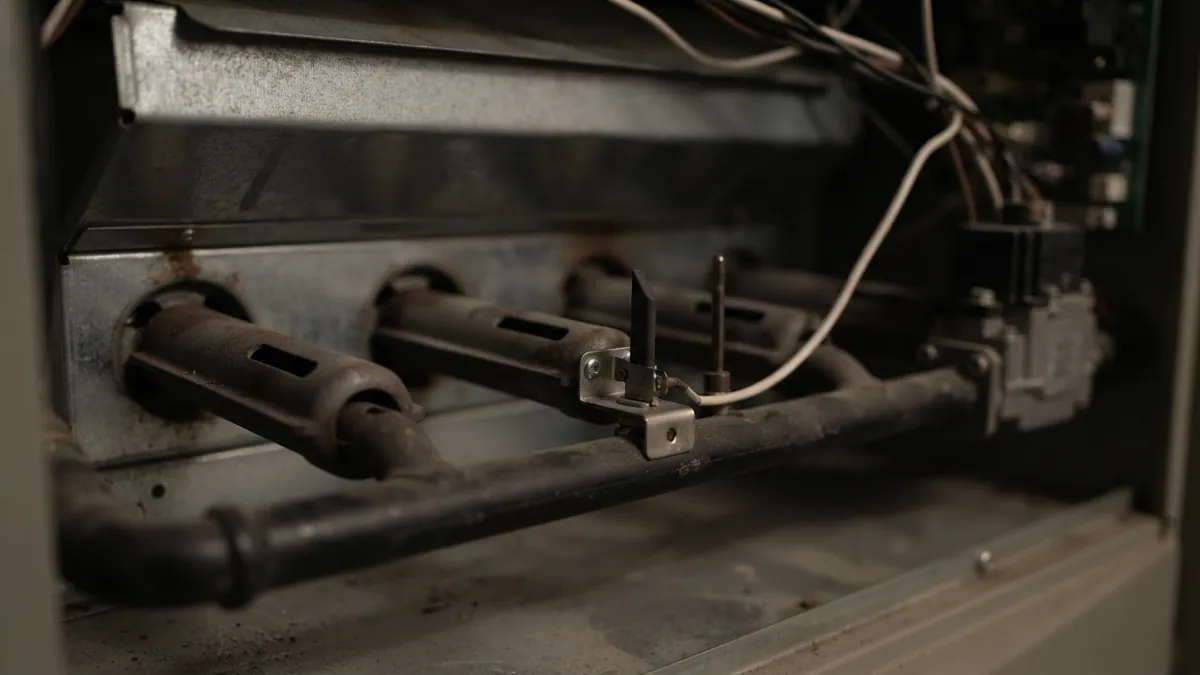
A hot surface igniter that doesn’t glow is a common reason a modern gas furnace won’t heat. The igniter is a small ceramic element that glows bright orange to light the gas, and it eventually wears out or cracks. But a non-glowing igniter isn’t always the igniter’s fault: the furnace may never be sending it power because an earlier step in the startup sequence failed.
Here’s how to tell the difference, and what replacement costs.
Safety first: igniters run on 120 volts and get extremely hot. Turn off power before touching anything, and never handle the igniter element with bare fingers. If you smell gas, leave the home and call your gas utility or 911 from outside.
Where the igniter fits in the startup sequence
On a call for heat, the furnace starts the inducer motor, waits for the pressure switch to confirm draft, and only then powers the igniter. So if the igniter doesn’t glow, ask: did the inducer start?
- Inducer doesn’t run: the problem is earlier: thermostat, power, door switch, control board or the inducer itself. See Furnace Not Turning On.
- Inducer runs, but the igniter never glows: likely a bad igniter, a pressure switch problem (blocked vent, cracked hose, water in the line), a loose connection, or a control board issue.
- Igniter glows, but burners don’t light: gas supply, gas valve or control problem.
- Burners light, then shut off after a few seconds: usually a dirty flame sensor. See how to clean a furnace flame sensor.
Check the control board’s LED code before you power down. A pressure switch code, for example, points away from the igniter. See our furnace blinking light codes guide.
Signs of a bad igniter
- The inducer runs, you hear the normal startup, but there’s no orange glow through the burner sight glass.
- A visible crack or white spot on the igniter element.
- The igniter glows weakly or only partly.
- The furnace makes several attempts and then locks out.
Why igniters fail
- Age: most last roughly 3 to 7 years. Silicon nitride igniters usually last longer than older silicon carbide ones.
- Touching: oils from fingers create hot spots that cause cracks.
- Short cycling: more starts mean more wear. See furnace short cycling.
- Voltage problems or a failing control board.
How a technician tests it
A technician will:
- Confirm the board is sending 120 volts to the igniter during the ignition step.
- Measure the igniter’s resistance with a multimeter and compare it with the manufacturer’s range.
- Inspect the element and wiring.
If voltage arrives but the igniter doesn’t glow, the igniter is bad. If no voltage arrives, the problem is upstream (pressure switch, limit switch or board).
Can I replace the igniter myself?
It’s a common part, and some handy homeowners do it, but there are good reasons to use a technician: the replacement must match your furnace model (or be a correct universal kit), the element is fragile, and misdiagnosis is common because the same symptom can come from the pressure switch or board. If you do it yourself, turn off power and gas, take a photo before removing anything, and never touch the element.
Igniter replacement cost
| Item | Typical cost* |
|---|---|
| Igniter part | $20 to $80 |
| Professional replacement (part, labor, service call) | $150 to $400 |
| Control board, if it’s the actual cause | $300 to $800 |
| Pressure switch, if it’s the actual cause | $150 to $400 |
*Typical U.S. ranges; emergency and weekend service often cost more. Ask the technician to keep a spare igniter on file for your model; they’re a common winter failure.
How to make igniters last longer
- Don’t touch the element during maintenance.
- Fix short cycling (filters, oversized equipment, thermostat placement).
- Have the furnace inspected annually.
Frequently asked questions
How long does a furnace igniter last?
Typically 3 to 7 years, depending on type and how often the furnace cycles.
How do I know if my igniter is bad?
If the inducer runs but the igniter never glows, and there’s no pressure switch or limit code, the igniter is the most likely cause. A technician can confirm with a multimeter.
Can a furnace work without an igniter?
No. Modern furnaces need the igniter (or spark ignition) to light the burners. Never try to light a modern furnace manually.
Disclaimer: this guide is for general information only. Gas furnaces involve gas, high voltage and hot surfaces. Contact a licensed HVAC professional for diagnosis and repair.