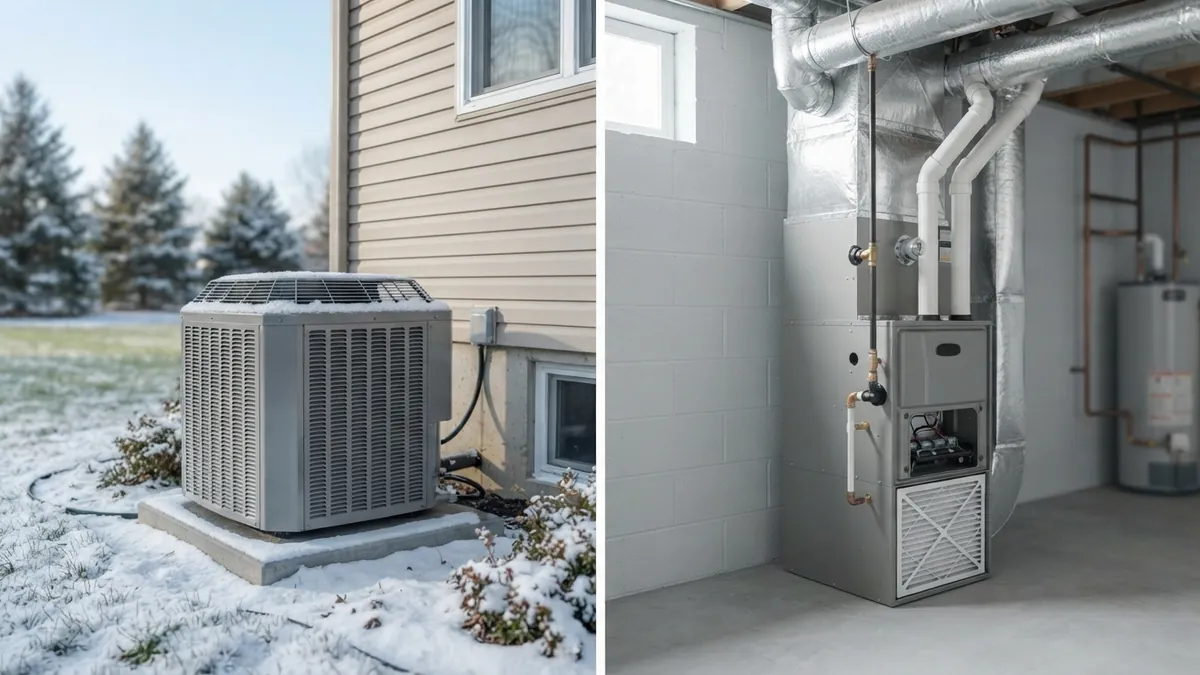
Whether a heat pump or a furnace is cheaper to run comes down to two numbers: your local price of electricity versus your fuel, and how cold your winters get. As a rule of thumb, a modern heat pump is cheaper to run than a propane, oil or electric-resistance furnace almost everywhere, and is roughly on par with, or cheaper than, a natural gas furnace in mild and moderate climates. In very cold regions with cheap natural gas, a high-efficiency gas furnace usually still wins on operating cost.
Below is the math, a cost comparison you can adapt to your own utility rates, and how to decide which system fits your home.
How each system makes heat
- A furnace burns fuel (natural gas, propane or oil) or uses electric resistance coils. A high-efficiency gas furnace turns about 95% or more of its fuel into heat (95% AFUE).
- A heat pump doesn’t create heat; it moves heat from the outdoor air into your home using refrigerant, the same way an AC works in reverse. Because it moves heat instead of making it, it delivers 2 to 4 units of heat for every unit of electricity it uses. That ratio is called the coefficient of performance (COP).
The catch: as the outdoor temperature drops, there’s less heat to move, so a heat pump’s COP and capacity fall. Modern cold-climate heat pumps can still deliver useful heat at 5°F and below, but they’re most efficient in mild weather.
Operating cost comparison
The table shows the cost to deliver 1 million BTU of heat (roughly what a typical home uses on a few cold winter days) under different price assumptions.
| System | Price assumption | Cost per million BTU delivered |
|---|---|---|
| Heat pump, COP 3 (mild weather) | $0.12/kWh | $11.72 |
| Heat pump, COP 3 (mild weather) | $0.17/kWh | $16.61 |
| Heat pump, COP 2 (cold weather) | $0.17/kWh | $24.91 |
| Heat pump, COP 3 (mild weather) | $0.25/kWh | $24.43 |
| Natural gas furnace, 95% AFUE | $1.00/therm | $10.53 |
| Natural gas furnace, 95% AFUE | $1.50/therm | $15.79 |
| Natural gas furnace, 95% AFUE | $2.00/therm | $21.05 |
| Propane furnace, 95% AFUE | $2.75/gallon | $31.64 |
| Oil furnace, 85% AFUE | $4.00/gallon | $33.98 |
| Electric resistance furnace | $0.17/kWh | $49.82 |
How we calculated: 1 million BTU = 293 kWh = 10 therms. Heat pump cost = 293 ÷ COP × electricity price. Furnace cost = fuel needed ÷ efficiency × fuel price (propane: 91,500 BTU per gallon; heating oil: 138,500 BTU per gallon). Plug in the prices on your own utility bills for an accurate comparison.
What the table shows:
- Against propane, oil and electric resistance, a heat pump is cheaper even in cold weather.
- Against natural gas, it depends. With moderate electricity prices and mild winters, a heat pump is competitive or cheaper. With expensive electricity (common in New England and California) and cheap gas, the gas furnace usually costs less to run.
- Seasonal averages matter more than single days. Modern heat pumps typically average a seasonal COP of about 2.5 to 3.5 depending on climate.
Upfront cost
| System | Typical installed cost (2026) | Notes |
|---|---|---|
| Gas furnace only | $3,000 to $8,000 | Needs a gas line and venting |
| Gas furnace + central AC | $10,000 to $20,000 | Two pieces of equipment |
| Air-source heat pump (ducted) | $8,000 to $16,000 | Heats and cools; replaces both furnace and AC |
| Cold-climate heat pump | $10,000 to $20,000 | Rated for low-temperature performance |
| Dual-fuel (heat pump + gas furnace) | $12,000 to $22,000 | Heat pump in mild weather, gas when it’s very cold |
Because a heat pump also does the job of an air conditioner, compare it with the cost of replacing both a furnace and an AC if both are aging. See our central AC replacement cost guide.
The federal 25C tax credit for heat pumps ended for installations after December 31, 2025, but many utilities and states still offer rebates. Check your utility’s website before buying.
Comfort and other differences
| Heat pump | Gas furnace | |
|---|---|---|
| Air temperature at vents | Warm (about 90 to 100°F), steady | Hot (about 120 to 140°F), in bursts |
| Cooling | Yes, built in | No, needs a separate AC |
| Performance in extreme cold | Reduced; may need backup heat | Unaffected |
| Fuel safety | No combustion, no carbon monoxide | Requires venting and CO alarms |
| Typical lifespan | 10 to 15 years | 15 to 20+ years |
| Maintenance | Year-round use; annual or twice-yearly service | Annual service before winter |
Some people find heat pump air feels less warm because it’s delivered at a lower temperature for longer periods. Good duct design and correct sizing make a big difference.
Which should you choose?
A heat pump is usually the better choice if:
- You heat with propane, oil or electric resistance.
- You live in a mild or moderate climate (much of the South, West Coast and Mid-Atlantic).
- You also need to replace your central AC.
- You don’t have natural gas service, or want to avoid combustion appliances.
A gas furnace is usually the better choice if:
- You have cheap natural gas and expensive electricity.
- You live in a very cold climate and your home isn’t well insulated.
- Your AC is fairly new and only the furnace needs replacing.
Consider dual fuel if you’re in a cold climate with gas service: the heat pump handles most of the season efficiently, and the furnace takes over on the coldest days.
Sizing matters as much as the equipment choice. See our heat pump size guide.
Frequently asked questions
Do heat pumps work below freezing?
Yes. Standard heat pumps work well down to around 25 to 30°F, and cold-climate models are designed to deliver heat at 5°F and below, with backup heat for the coldest days.
Is a heat pump cheaper than gas?
It depends on your local electricity and gas prices and your climate. Use the formula above with your own utility rates.
Can I keep my furnace and add a heat pump?
Yes. A heat pump can replace your AC and work alongside the furnace as a dual-fuel system, with a compatible thermostat deciding which one runs.
How long do heat pumps last compared with furnaces?
Heat pumps typically last 10 to 15 years because they run year-round. Gas furnaces often last 15 to 20 years or more.
Disclaimer: cost figures are examples for general information. Use your own utility rates and get quotes from licensed HVAC contractors.