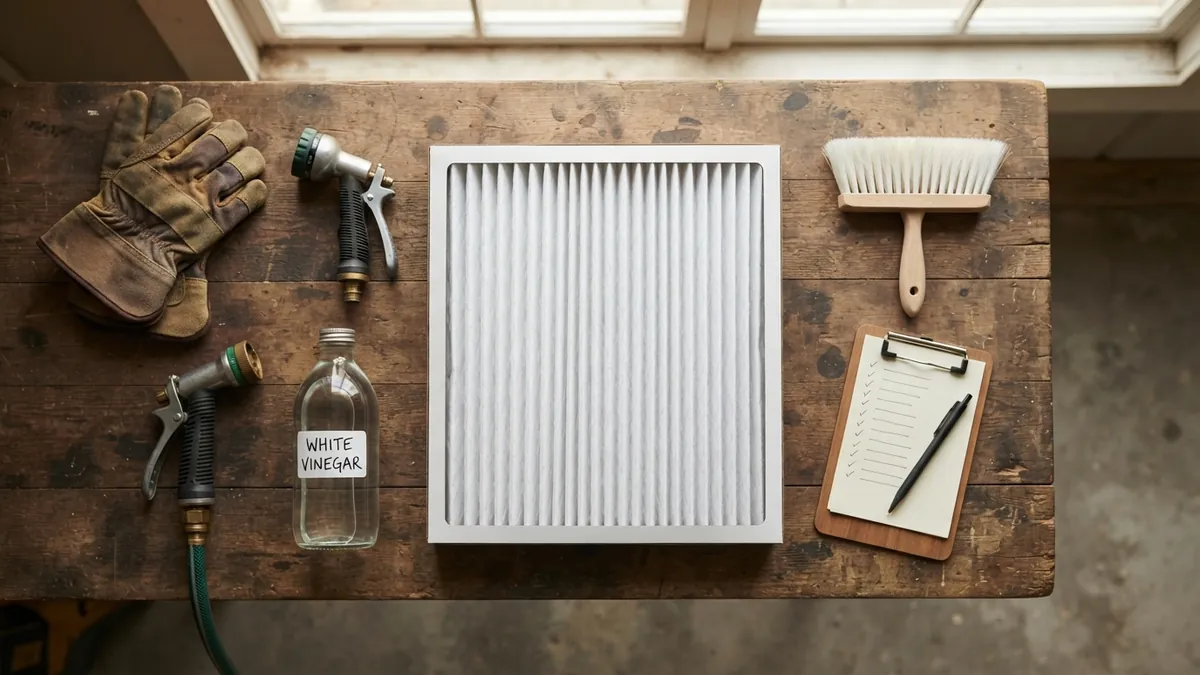
A few simple tasks each season keep your heating and cooling system efficient, prevent most breakdowns and help it last years longer. Most homeowners can handle the monthly and seasonal tasks below in under an hour; leave the electrical, gas and refrigerant checks to a professional tune-up once or twice a year.
Use this checklist season by season. Each task links to a step-by-step guide where we have one.
Quick overview
| When | Do it yourself | Professional |
|---|---|---|
| Every 1 to 3 months | Check and replace the air filter | — |
| Spring | Clean the outdoor unit, flush the drain, test cooling | AC or heat pump tune-up |
| Summer | Keep the outdoor unit clear, watch for warning signs | Only if problems appear |
| Fall | Test heating, check CO alarms, clear vents | Furnace or heat pump tune-up |
| Winter | Keep the outdoor heat pump clear of snow and ice, watch the filter | Only if problems appear |
Every month (2 minutes)
- Check the air filter. Replace it when it looks gray or you can’t see light through it. Most 1-inch filters need replacing every 1 to 3 months. See how often to change your air filter.
- Look and listen. Note new noises, smells, short cycling or water around the indoor unit.
Spring: before cooling season
Do it yourself:
- Replace the air filter.
- Turn off power and clean debris from around the outdoor unit; keep 2 feet of clearance.
- Rinse the outdoor coil with a garden hose. See how to clean AC condenser coils.
- Check that the outdoor unit sits level on its pad.
- Flush the condensate drain line with a cup of distilled white vinegar. See how to unclog an AC condensate line.
- Check the refrigerant line insulation near the outdoor unit and replace any that’s cracked or missing.
- Replace thermostat batteries and review your summer schedule.
- Test the AC on a mild day: the air from the vents should feel noticeably cooler than room air within 10 to 15 minutes.
Professional AC or heat pump tune-up (typically $75 to $200):
- Check refrigerant pressures and look for leaks.
- Test the capacitor and contactor. A weak capacitor is a common summer failure; see bad AC capacitor symptoms.
- Tighten electrical connections and measure motor amperage.
- Clean the indoor evaporator coil and drain pan if needed.
- Check airflow and the blower.
Summer: during cooling season
- Check the filter monthly; dust and pollen load it faster.
- Keep grass clippings, leaves and cottonwood fluff off the outdoor unit. Point mower discharge away from it.
- Flush the condensate line with vinegar every 1 to 3 months.
- Close blinds on sunny windows during the hottest hours to reduce load.
- Watch for warning signs: warm air, ice on the copper lines, water around the indoor unit, or an outdoor fan that won’t spin. Our AC not cooling guide walks through each one.
Fall: before heating season
Do it yourself:
- Replace the air filter.
- Clear furniture, rugs and drapes from supply vents and return grilles.
- Test smoke and carbon monoxide alarms and replace batteries. Every home with a gas furnace, gas appliances or an attached garage should have CO alarms near sleeping areas.
- Make sure the area around the furnace is free of stored items, especially anything flammable.
- Check that exterior furnace vent pipes (on high-efficiency furnaces) are clear of leaves, nests and debris.
- Turn on the heat on a cool day. A slight dusty smell the first time is normal and should clear within an hour.
- Switch ceiling fans to clockwise at low speed to push warm air down.
Professional furnace or heat pump tune-up (typically $75 to $200):
- Inspect the heat exchanger for cracks and check for carbon monoxide.
- Clean and test the flame sensor and igniter.
- Check gas pressure, burners and the venting system.
- Test safety switches and the blower.
- For heat pumps: check the defrost cycle, reversing valve and auxiliary heat.
Winter: during heating season
- Check the filter monthly.
- Heat pumps: keep the outdoor unit clear of snow and ice, and keep 2 feet of clearance. A layer of frost that clears during defrost cycles is normal; a solid block of ice is not.
- High-efficiency furnaces: after snowstorms, make sure intake and exhaust pipes outside aren’t blocked by snow.
- Never cover a heat pump during winter.
- Watch for warning signs: the furnace blowing cold air, short cycling, or unusual noises.
Year-round habits that extend system life
- Don’t close more than about 20% of the vents in your home.
- Avoid extreme thermostat swings; moderate setbacks save energy without overworking the system.
- Keep return grilles clean and unobstructed.
- Write down the date of every filter change and service visit. A simple note on the furnace helps.
- Register your equipment with the manufacturer to keep the full parts warranty, and keep service records, which some warranties require.
Is a maintenance plan worth it?
Many contractors sell annual plans with two tune-ups, priority service and repair discounts for about $150 to $300 a year. They’re often worth it if you’d schedule two tune-ups anyway. Read what’s included and avoid long contracts with automatic renewals you didn’t agree to.
Frequently asked questions
How often should an HVAC system be serviced?
Once a year for an AC or a furnace, ideally in spring for cooling and fall for heating. Heat pumps run all year, so twice a year is common.
What maintenance can I do myself?
Changing filters, cleaning the outdoor unit, flushing the condensate drain, keeping vents clear and testing CO alarms. Leave electrical, gas and refrigerant work to licensed technicians.
Does maintenance really prevent breakdowns?
It catches the most common causes of failure early: dirty coils and filters, weak capacitors, small refrigerant leaks and clogged drains.
Disclaimer: this checklist is for general information only. Gas, electrical and refrigerant work should be done by licensed professionals. If you smell gas, leave your home and call your gas utility or 911 from outside.