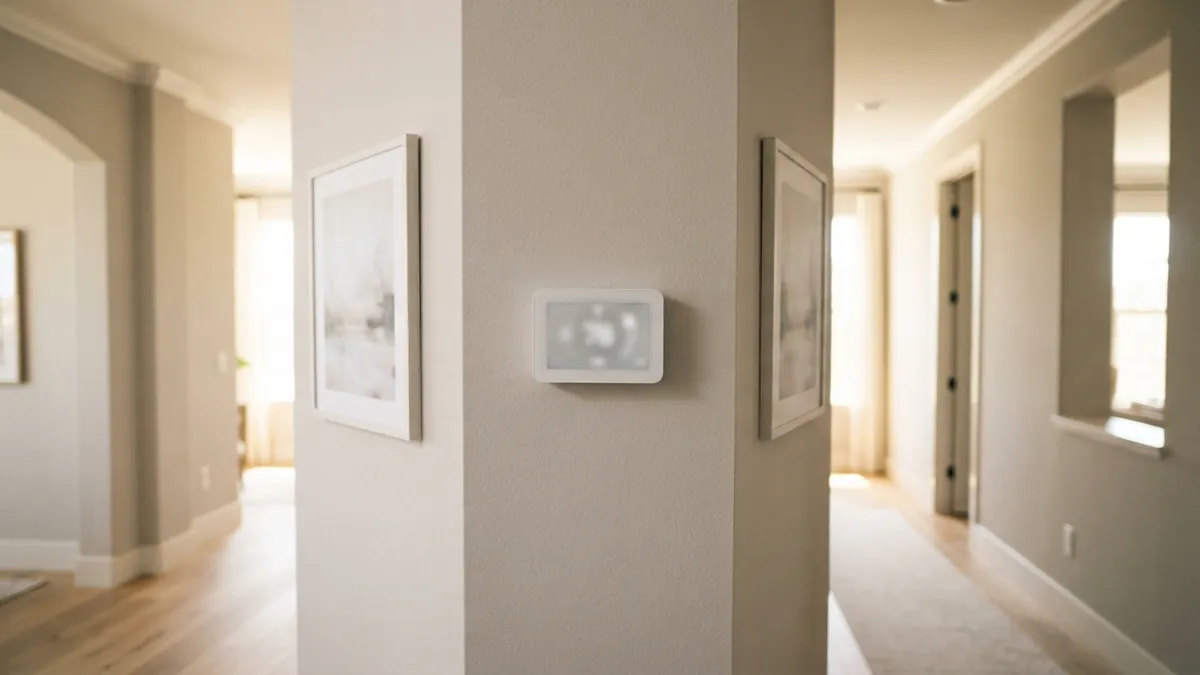
The best place for a thermostat is on an interior wall in a central, frequently used room, about 52 to 60 inches (roughly 5 feet) above the floor, away from direct sunlight, supply vents, doors, windows, kitchens and heat-producing electronics. A thermostat in the wrong spot reads the wrong temperature, which leads to rooms that are too hot or cold, higher bills and furnace short cycling.
These are the 5 rules HVAC installers follow.
Rule 1: Use an interior wall
Exterior walls are colder in winter and warmer in summer than the room air, so a thermostat on an outside wall misreads the temperature. Choose a wall with conditioned space on both sides.
Rule 2: Pick a central, lived-in room
The thermostat should sense the temperature where people spend their time, usually a hallway near the center of the home or the main living area. Avoid rarely used rooms, rooms that are often closed off, and rooms with their own heat sources (such as a fireplace or sunroom).
In two-story homes, a single thermostat downstairs often leaves the upstairs warmer. Remote room sensors or zoning help; see AC running but upstairs is hot.
Rule 3: Mount it at the right height
About 52 to 60 inches above the floor is standard. Too low and it reads the cooler air near the floor; too high and it reads warm air near the ceiling. Accessibility guidelines often call for controls no higher than 48 inches, which is a reasonable option where that matters.
Rule 4: Keep it away from heat and drafts
Avoid placing a thermostat:
- In direct sunlight from a window or skylight.
- Directly above or near a supply vent or return grille.
- Near exterior doors, drafty windows or stairwells that act like chimneys.
- In or next to the kitchen, near ovens and dishwashers.
- Above or beside lamps, TVs, computers or other electronics.
- Behind doors, furniture or curtains that block airflow.
Rule 5: Seal the wall opening
Air from inside the wall can blow out of the hole behind the thermostat and skew its readings, especially on older homes. Seal the wire hole with a small piece of insulation or putty.
Signs your thermostat is in the wrong place
- The furnace or AC turns off before the rest of the house is comfortable.
- The system runs in short bursts.
- The thermostat shows a temperature very different from a separate thermometer in the same room.
- Readings jump when the sun hits the wall or when an appliance runs.
Should you move your thermostat?
Moving a thermostat means running thermostat wire through walls, which is usually a $150 to $500 job for a technician. A cheaper alternative with many smart thermostats is to add wireless remote sensors in the rooms that matter and set the thermostat to use them instead of its own sensor.
Frequently asked questions
Can a thermostat be on an exterior wall?
It can, but readings will be less accurate. If you can’t move it, seal the wall opening and consider a smart thermostat with remote sensors.
Is a hallway a good place for a thermostat?
Often yes, if it’s central and not near an exterior door, stairwell or supply vent.
Does thermostat location affect energy bills?
Yes. A thermostat that reads too warm or too cold makes your system run more or less than it should.
Disclaimer: this guide is for general information only. Turn off power before working on thermostat wiring, and contact a licensed HVAC professional to relocate one.